
Find Smith County Resident Records
A Smith County residents directory search works by connecting a name or an address to the record that holds it. A deed names who transferred land. A property account names who owns a parcel. A printed city directory places a household in one year. None of these alone proves where someone lives today. To find who lives on a street in Smith County, start with the official source that fits your question, keep its identifier, and confirm against a second record before you conclude anything.
- Search an address by property location and capture its account, situs, and owner name.
- Compare SCAD and tax fields, keeping the owner mailing address separate from the property location.
- Search the Clerk index for a document number and legal description.
- Test a supported name in the voter or court route.
- For earlier years, request the relevant library or archive source.
Smith County Records Office Routes
Each office holds one piece of the puzzle. The Smith County Clerk records deeds, plats, marriage licenses, probate, civil files, and misdemeanors. The District Clerk keeps district-court matters. SCAD handles appraisal, and the Tax Assessor-Collector runs a separate account search. Elections Administration maintains the voter roll. Records Services at 1517 W. Front Street, Room 150, routes older inactive files. For history, the Texas State Library microfilm guide and Tyler Public Library serve as strong fallbacks.
Smith County Clerk
200 E. Ferguson, Suite 300
Tyler, TX 75702
(903) 590-4670
Elections Administration
302 E. Ferguson, Tyler, TX 75702
(903) 590-4777
Smith County Property Search Fields
A parcel has two sides in Smith County records. SCAD handles the appraisal side. The tax portal handles collection. Its help page separates owner name, owner address, property location, and account number. With property location, drop the street type and direction as the portal instructs. Be careful with mailing fields. A mailing address can point to a post-office box, a business, or another property. Treat it as a lead rather than an occupancy claim. A homestead flag is likewise not a daily household roster.
| Control | Options | Use |
|---|---|---|
| Search By | Account, owner name, owner address, property location | Separates situs and mailing fields |
| Inactive accounts | Yes or No | Expands tax-account results |
| Pay status | Both, paid, unpaid | Filters account status |
See the Smith County tax search shown below before choosing a mode.
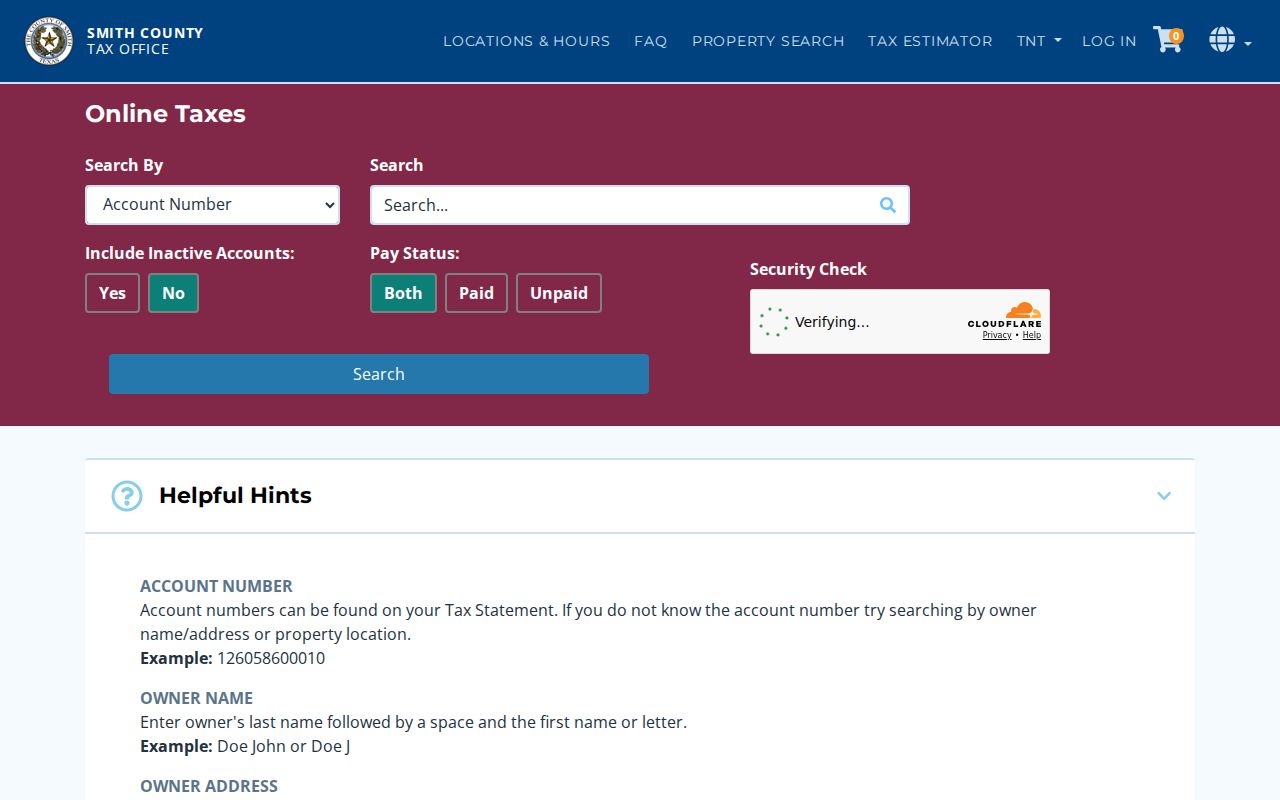
The form lays out the property-location and owner-address fields side by side. That distinction matters in any Smith County residents directory address search.
Smith County Voter Record Limits
The Texas My Voter Portal accepts a VUID, a Texas driver-license number, or a first-and-last-name lookup. County, date of birth, and ZIP surface in the update workflow. Election Code sections 13.004 and 18.005 shield identifiers, phone numbers, protected addresses, and ballot choices. A voter result covers registration only. It does not list everyone at an address. A suspense status means the registrar questions an address. The voter stays active during that statutory process. Treat any result as a lead, and match it against a land, court, or historical source before relying on it.
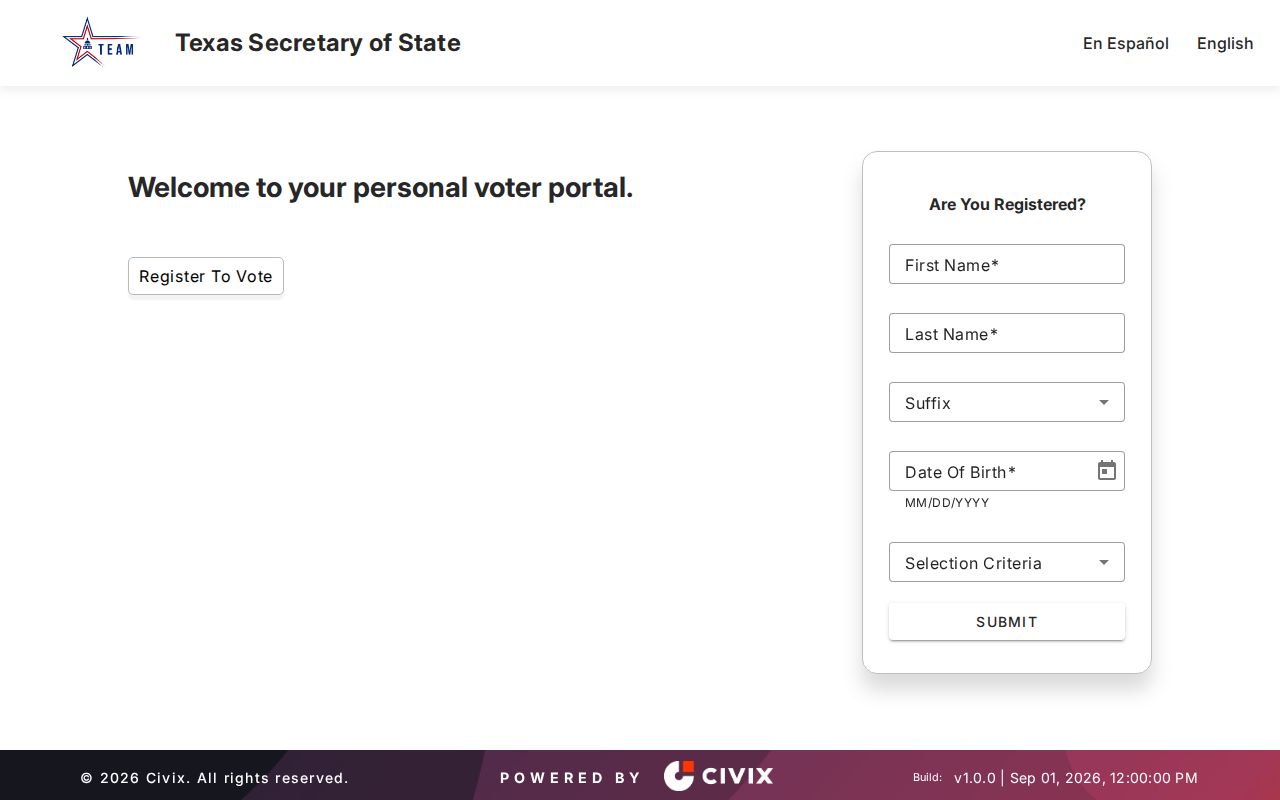
Smith County Elections Administration handles county-level questions. A full file requires the Secretary of State request process and its confidentiality limits.
Smith County Deed Index Trail
The Official Public Records Search offers Quick Search, Advanced Search, recorded-date ranges, and index-only or full-text OCR scope. You can search by grantor, grantee, subdivision, document type, or document number. The productive trail runs backward. Search the current owner as grantee. Note the document type, date, and legal description. Then search the seller as an earlier grantee. An address can change. A parcel can split. The legal description is what bridges the gap.
- Grantor
- The party transferring an interest.
- Grantee
- The party receiving it.
- Index
- A pointer to a record, not a certified copy.
- Parcel
- A land unit, not a household list.
The portal does not state its online start year. The state guide documents deeds from 1846, early index reels, and volumes through 1906. Older work moves to microfilm or the Clerk's custody.
Current Smith County Resident Sources
No current record covers everyone. SCAD and tax records show owners and account data. Voter records reflect registration under statutory limits. Deeds name land parties. Court files name people in a case role. Professional records show an affiliation, never a verified home. The Texas license ID search asks for a license type and returns credential information that still needs corroboration. The official license form shows that limited workflow plainly.
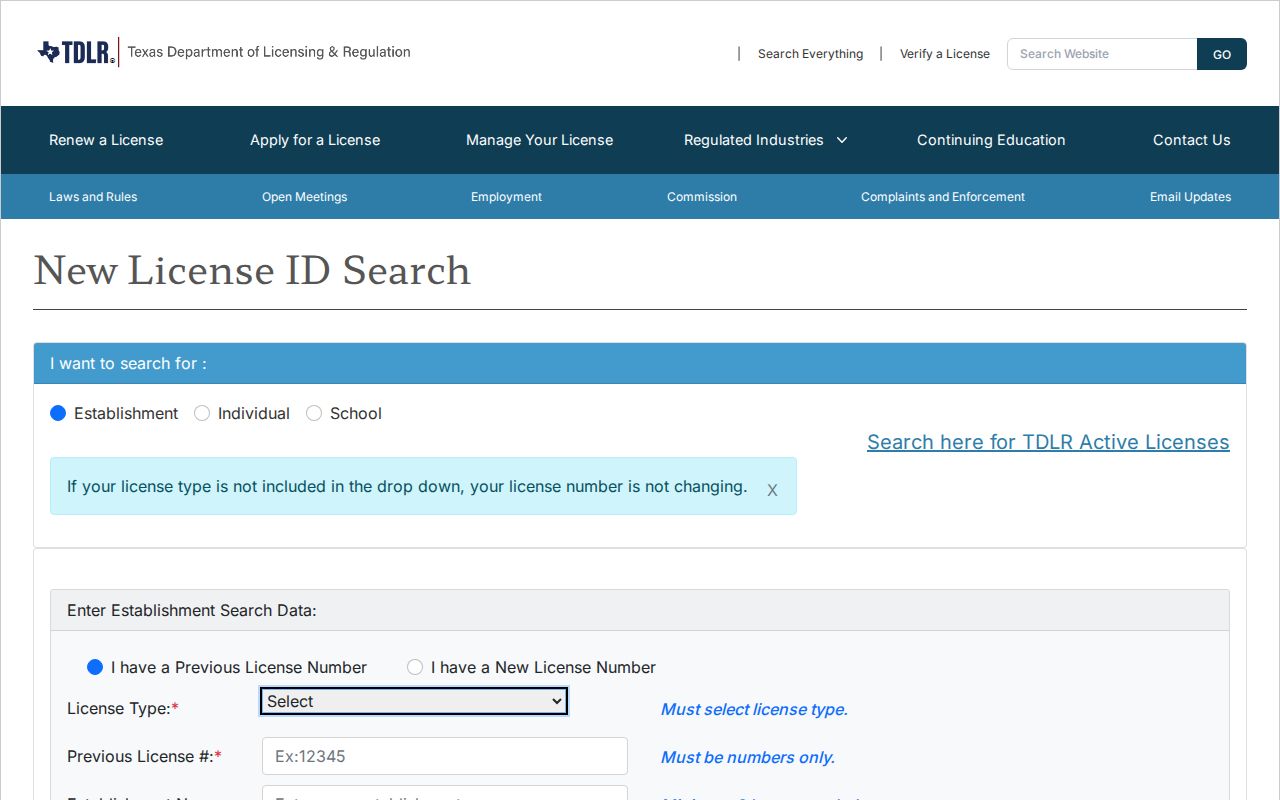
A license number, type, and dates can anchor an identity. They should not become a residence assertion.
Smith County Court Coverage Dates
The Smith County Public Search Site routes county judicial searching. Coverage is listed from 1997 for civil and 1995 for criminal. It starts in 1992 for probate. County Clerk misdemeanor material begins in 1976. Tyler Municipal Court sits in a different jurisdiction. If the portal is down, call the clerk with a case number or date range. Records Services handles older inactive material. Court rules govern access, and sealed, juvenile, or protected files stay restricted.
Tyler Limits in Smith County Records
Tyler limits, ETJ lines, postal names, and ZIP areas do not follow county borders. Tyler planning points address questions to SmithCountyMapSite.org. Zone 2 stays under city control for subdivision authority. Zone 3 is county controlled. From about 1910 on, Tyler births and deaths were recorded at City Hall rather than in the county series. Outside the city, the County Clerk serves as local registrar. Always identify the place of occurrence before deciding a record is missing.
Texas Vital Access for Smith County
The DSHS vital-order route separates indexes, verifications, and certified certificates. Birth records open to the public after 75 years. Death records open after 25 years, under Government Code section 552.115. Marriage verification indexes begin in 1966. Divorce verification indexes begin in 1968. Recent protected certificates go only to qualified people or those with legal authority. The County Clerk issues Smith County marriage-license copies. The District Clerk handles certified divorce decrees.
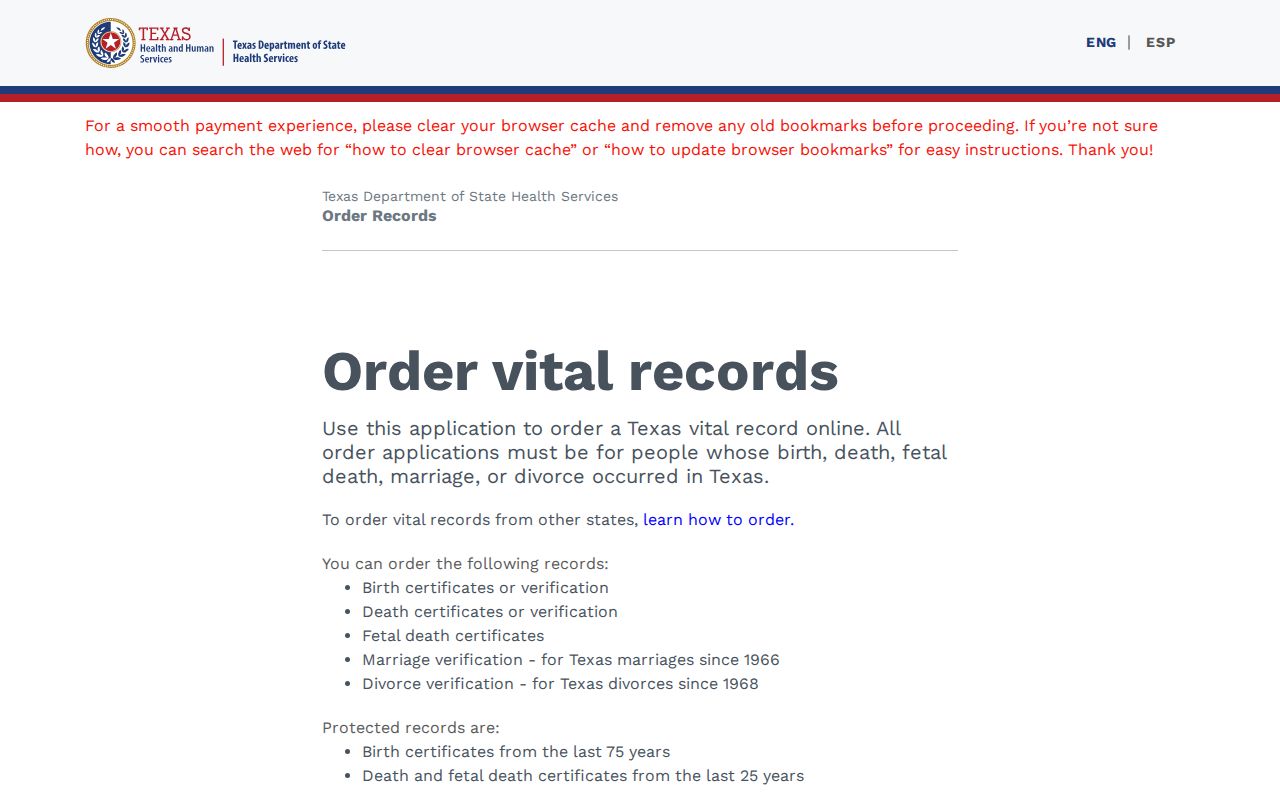
Think of the state order page as a counter where a qualifying requester buys a record, not a Smith County residents directory of the living.
Historical Smith County Directories
Old city directories are the backbone of any search for past residents of Smith County. The Smith County Historical Society holds Tyler and county volumes spanning 1882 to 1999. Gardner and Gazetteer came first. Worley, Pruden, and Polk followed. Each directory can carry a name and street address. It can also add an occupation, telephone, or a spot in its street guide for the year it printed. Criss-cross volumes flip the lookup around. They take an address and hand back the historical occupant. For collection details and help reading entries, see the Smith County city directory page.
When an online resident lookup runs dry, two local channels remain. Tyler Public Library offers a Local and Family History Room. It takes appointments. The room offers microfilm, genealogy computers, scanning, city directories, newspapers, yearbooks, cemetery books, and local indexes. The Historical Society works differently. Appointments are required, staff pull the materials, and browsing and photography are off limits. Both are legitimate ways into the property rolls and directory past of Smith County.
Smith County Historical Atlas
A 2025 atlas from the County GIS office and the Historical Commission maps the ground beneath the records. It marks landmarks and historic routes. It plots more than 200 cemeteries. Popup images and documents ride along with many entries. Treat it as a geography layer for tracing an old road, cemetery, or neighborhood, not as a Smith County residents directory of current households. Tyler's Texas College-area historic-resources survey adds building context as it grows. Pair both with a deed, plat map, or dated city directory rather than leaning on either alone as proof of who lived where.
Smith County Public Information Limits
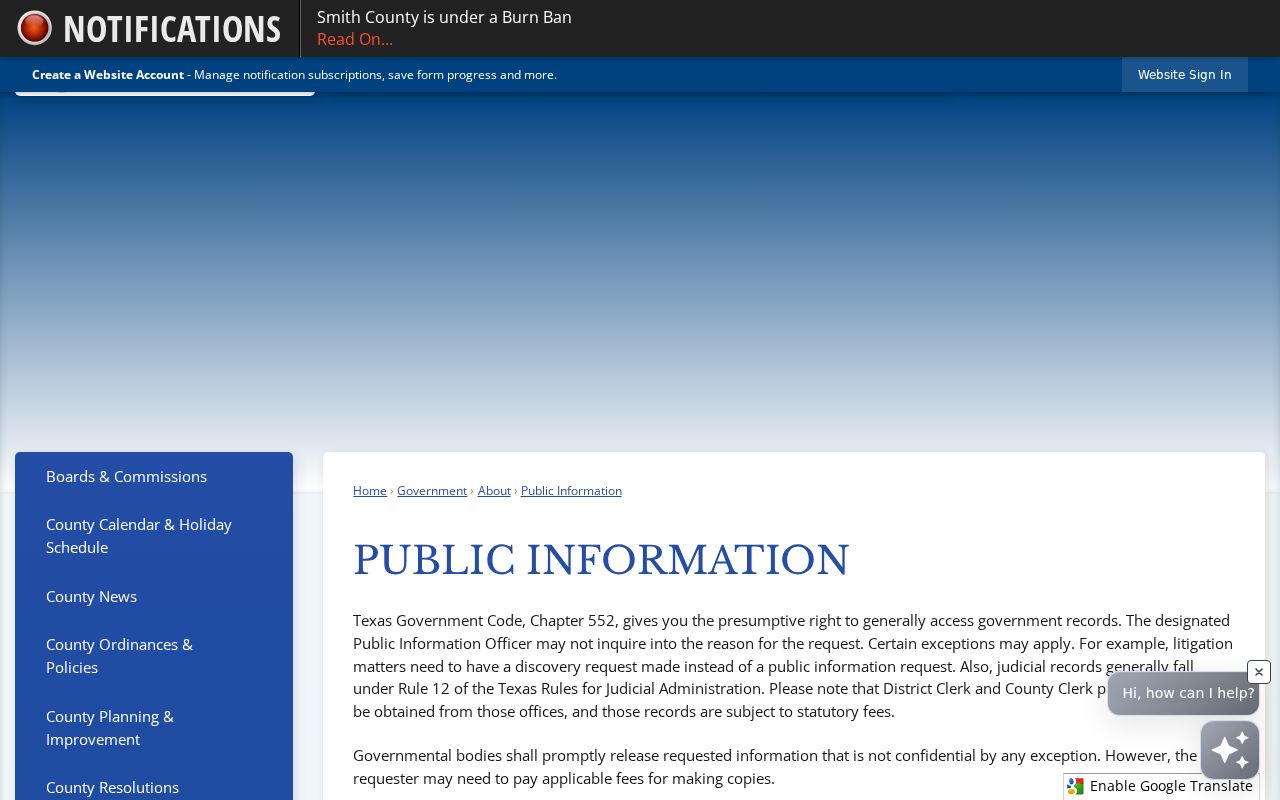
Texas opens its government records by default. The Public Information Act, Government Code chapter 552, makes existing information available unless a specific exception applies. That word "existing" matters. A good request names a parcel, reel, volume, case, date range, or document type instead of asking an office to compile something new. Smith County's Public Information instructions lay out inspection, copies, or both. They also state plainly that a custodian need not create records or do research for a requester. So bring specifics when you approach the recorder or assessor.
Judicial records, protected vital certificates, and address-confidentiality materials have their own access rules.
Check Smith County Results Carefully
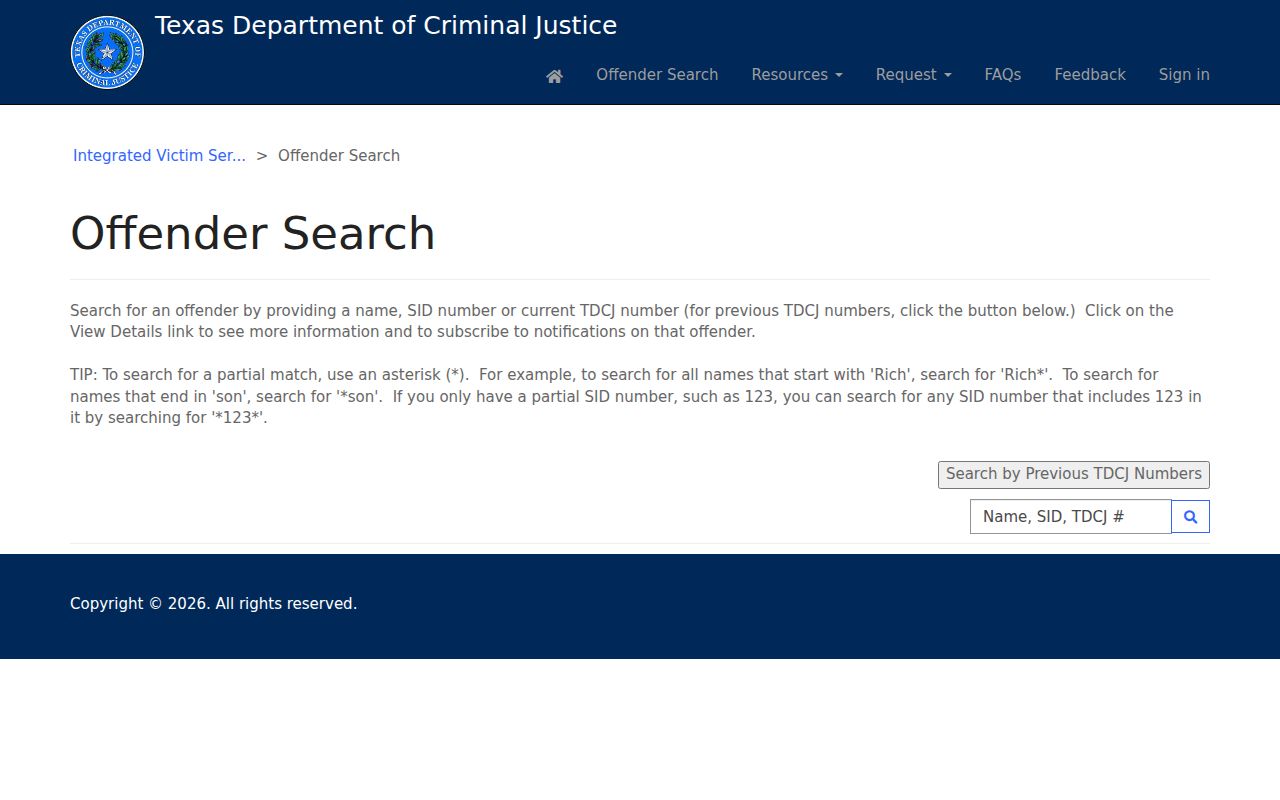
A pile of matching names proves little by itself. Solid conclusions come from a corroborated trail. Common surnames, initials, suffixes, maiden names, rural routes, and postal variants can quietly merge two people or split one into two within an index. Write down the name you searched, the date, the place, the person's role, and one stable identifier for each hit. State tools can anchor a trail. The TDCJ Offender Search works from a name, SID, or TDCJ number. Remember it covers state custody only. It is neither a county jail roster nor an address source for the broader Smith County street directory.
Note: Weigh each source's purpose and limits before you draw any conclusion, especially where a living Smith County resident is involved.